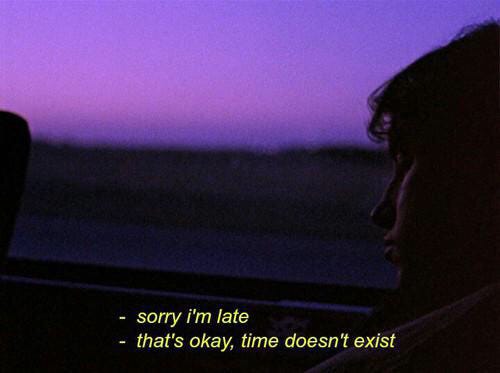
An apology that wants nothing is harder to hold than one that wants something. The one that wants something, you can refuse. The one that wants nothing, you have to feel.
People warned me against it— told me to set it down and let it go, because apologies sent into certain kinds of silence have a way of being rewritten by the person who receives them. I knew that going in and I told them my reasoning: an apology is not an apology if it comes with expectations. What someone does with your apology, how someone interprets your apology… is out of your control. I just knew that they deserved one. And I don't regret saying sorry at all.
I want you to sit with that for a second. Because I think people have forgotten what an apology sounds like when it isn’t a transaction. When it isn’t the opening line of a negotiation. When it isn’t I’m sorry followed by so can we followed by I just need you to followed by the thing the apology was always building toward.
I said I’m sorry. No request for access. No ask for a second chance. No hand extended waiting to be pulled back in. Just the apology, standing alone in the room, not leaning on anything, not walking toward anything, not expecting the door to open just because I knocked.
That’s what most people don’t understand. They hear I’m sorry and they listen for the second sentence. They wait for the ask. They brace for the manipulation. And I understand why. Because most apologies come with luggage. Most apologies are round-trip tickets. The person says sorry and then stands in your doorway waiting to be invited in and the sorry was never about your pain. It was about their re-entry.
Mine was the change. Not the prelude to the change. The woman who couldn’t say those words a year ago, who would have folded the wrongness into silence and carried it privately and let the distance grow rather than name what she did said sorry without armor. Without a strategy for what comes after. The after wasn’t the point. The saying was.
And here’s what I learned about people when you apologize without asking for anything:
Some of them don’t know what to do with it.
An apology without an ask disrupts the script. They were prepared for the negotiation. They had their lines ready. The boundary speech. The I need space speech. The you can’t just say sorry and expect everything to go back to normal speech. And those speeches are valid. I’m not dismissing them. But when the apology arrives and it doesn’t ask for normal. Doesn’t ask for anything. Just sits there, open-handed, some people get uncomfortable. Because an apology that wants nothing is harder to hold than one that wants something. The one that wants something, you can refuse. The one that wants nothing, you have to feel.
Some people took my apology and made it a pedestal. They stood on it. They held it up as evidence not of my growth but of my guilt, as if the vulnerability was a weapon I'd handed them and they intended to keep it polished.
That’s the thing about apologizing to someone who needed you to be wrong more than they needed you to change. The apology doesn’t land as love. It lands as leverage.
And I think that was always the problem. Not the thing I did. Not the way I hurt them. The way the apology got received. The way it was held up and examined and turned over not for understanding but for use. The way some people hear I’m sorry and instead of hearing a person who sat with what they did and decided to name it at the cost of their own pride, they hear confirmation. See. She admitted it. I was right.
You were right. And I was sorry. And those two things should be able to exist in the same room without one of them standing on the other.
I’m not sorry for apologizing. I would do it again. I would say it the same way, in the same voice, with the full weight of my reflections. Because an apology that asks for nothing is the purest thing I know how to give. It is love with no return policy. It is a woman saying I see what I did and I’m not hiding from it and then walking away. Not because she doesn’t care about the outcome. Because the outcome was never hers to control.
It is not weakness to apologize. I need that sentence to exist somewhere outside of my own head.
It is not manipulative to say I was wrong. It is not weakness to be soft in a room that rewards hardness. It is not weakness to hand someone a piece of your pride and watch them do whatever they want with it and still not regret the handing.
The weakness would have been silence. The weakness would have been letting the wrongness calcify into distance and the distance into narrative and the narrative into a version of the story where I never took responsibility because taking responsibility would have meant feeling something I’d rather avoid.
And the apology is still the best thing I’ve ever done. Not because it fixed anything. Because it proved, to the only person whose opinion I’m still learning to trust, that I am capable of looking at my own mess without performing composure. I learned that it is okay to cry as much as it is okay to lose.
And if they needed it to be a pedestal, that tells me something too. Not about the apology. About the height they needed to stand at to feel safe. And I understand that. I do. I’ve stood on other people’s admissions before. I know what it feels like to need someone’s sorry more than you need their growth. To hold the apology like a trophy because the alternative is holding the grief, and the grief doesn’t look as good on the shelf.
But I’m not a shelf. And the sorry wasn’t a trophy. It was a hand, open, palm up, offering the only thing I had left to give.
If someone doesn’t see it the way you do, that’s okay.
You still had the courage to open your hand.
張開本身,
這就是她學會最勇敢的姿勢。


🤍