For keeps?
That’s the thing about objects. They hold their shape even when love doesn’t.
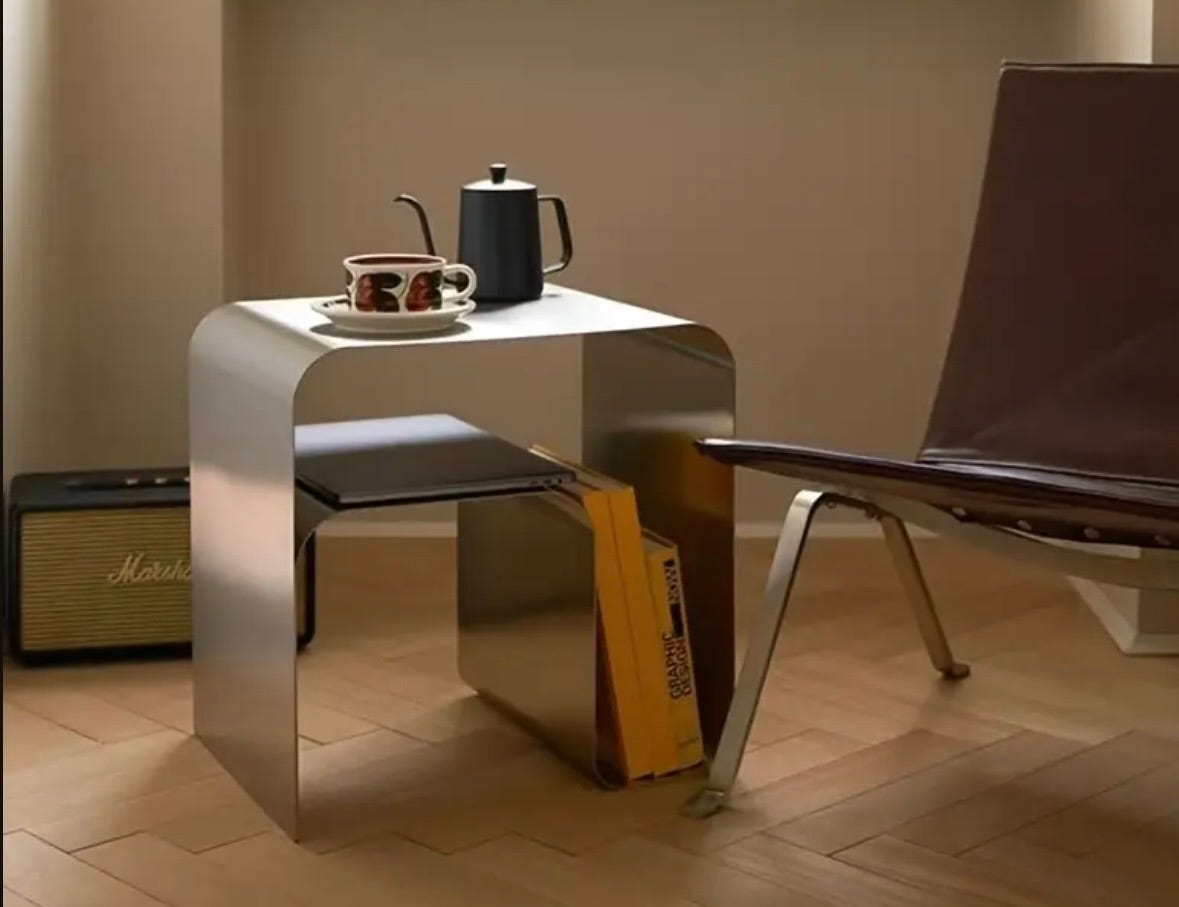
Lately, I’ve developed a passion for decluttering.
As if I needed another passion project.
With market volatility pressing pause on the legal front, I’ve finally had time to do something I haven’t done in a while: be. Not in meetings, not in motion, but actually be inside the home I’ve curated piece by piece between travel, deadlines, and caffeine-fueled decisions. And now, I’ve finally given myself permission to look around. Not just at my space, but through it.
I’ve been reading “The Beauty of Ordinary Things” by a Japanese author whose quiet reflections on everyday life remind me that not everything needs a point to be worthwhile. Some things just are, and their presence is enough. I think about the ideals of Japanese interior design: the reverence for negative space, the way a single ceramic bowl on a shelf can feel more intentional than a dozen curated pieces.
Elsie de Wolfe once said, “I am going to make everything around me beautiful. That will be my life.” And I feel that lately. Not in a Pinterest-perfect, retail-therapy kind of way. But in the small edits: giving away a pair of shoes I’ll never wear, wiping down a windowsill that’s collected dust, letting go of what no longer fits…not just physically, but emotionally, energetically.
My first memory of mid-century modern design was at age twelve, hearing my dad talk about it while thumbing through a Dwell magazine. He was an aeronautical engineer at the time, so in hindsight, it makes sense. Clean lines, intentional function, weight-to-strength ratios; it was design that flew and furniture that felt like flight. What stayed with me wasn’t just the design philosophy but the way it made me realize that people are allowed to contain multitudes. That loving balance sheets doesn’t mean you can’t also love balance beams. That’s what makes someone interesting… when they aren’t just one thing.
Lately I’ve been sketching the dimensions of my room on graph paper, attempting to integrate Bauhaus with mid-century modern. I’m not even sure how to explain why that combination works for me: something about its tension. Function over form, but never without spirit. Clean lines, but always a story behind them. I’ve decided to give up an entire corner of my wardrobe to replace it with a small art studio. I want to get back into pottery— a kickstand wheel, no electricity, just the slow rhythm of feet and clay and bare hands. My nails, after years of acrylic glue, have finally grown out. They’re uneven. A little jagged. But I like them. I’m not in a rush to get them done again. I like how they look now, like they belong to someone who works with their hands.
There’s a vintage writing box on my shelf. It folds open like a secret. An ex bought it for me, and I still love it, even if we’re not in love anymore. That’s the thing about objects. They hold their shape even when love doesn’t. Some things earn the right to stay.
Living in Tokyo refined that perspective.
By the time I left, I felt lighter. Less attached to material things, more attuned to memory, story, and texture. The only objects I now feel a true bond with are the ones layered with sentiment: old letters, inherited photographs, vintage tables worn by time. My grandmother’s gold heirlooms. She was a woman far ahead of her time—pragmatic but elegant. I still remember her voice telling me, “Gold must be at least 18k or more. Otherwise, it’s just decoration.” I was maybe seven, draping her necklaces over my ears, pretending they were crowns.
Now, as I declutter, I find myself sorting through gifts I’ve never worn: a Cartier necklace still in its box. Van Cleef. Tiffany. Chanel earrings still pristine. Luxury items that arrived in velvet-lined boxes with handwritten notes from people who saw me through a lens I didn’t ask for. Yes, I’m a woman. But I still use my $30 tote because it fits everything. Though I probably should wash it—it’s acquired more character than anything else I own.
And then there’s the sentimental shelf. Ticket stubs from early flights and first dates. Name tags that carry someone else’s handwriting. Stuffed animals from claw machines I’ll never display, but can’t quite throw away. What do you do with souvenirs from a chapter that’s closed but still echoes?
Someone once wrote, “What you keep sometimes keeps you in the past.” I’ve been turning that over in my mind. I wonder: am I saving these things for a future child? And if not—am I saving them for the version of me that needed them to believe love was real?
These thoughts come and go, like everything else. Brief, but heavy.
Decluttering isn’t just about making space. Sometimes it’s about making peace. Letting your home become a mirror for the person you are now—not the version you had to be, or the version someone else expected you to become. There’s a quiet kind of liberation in learning that the most beautiful rooms aren’t always the most decorated. They’re the ones where nothing demands to be more than what it is.
And maybe that’s what I’ve been craving all along: a space that holds me without holding me back.


I appreciate this relateable post, speaking as someone who has quickly adjusted to experiences over objects in my 40s. It also calls to mind my fondness for Swedish Death Cleaning.
While I don't have concert stubs and first date receipts out in the open (as well as every birthday card from one of my sisters), they are neatly kept in shoebox sized containers far fancier than a shoebox.
By reading your post, I feel it's my cue to finally hang some artwork that's been sitting in my hallway for far too long as well as get frames for photos of my loved ones.
Excellent choices with bauhaus x mid century modern. I'd be more worried if you went brutalist x pomo.