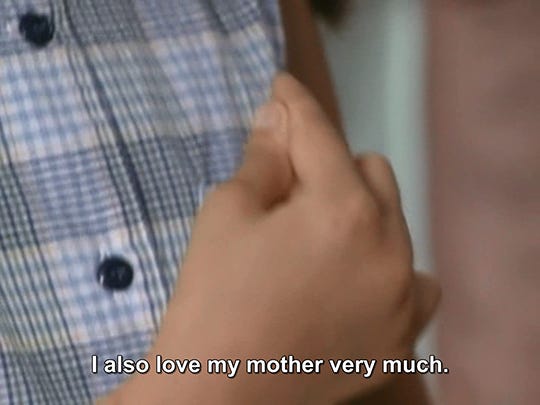
I know how much you've given
There is a quiet shift that happens as you grow up- the moment you realize your parents are not fixed points in the universe, but people improvising, carrying unfinished stories, doing the best they can with the tools they were handed. They moved through life with the same uncertainty you feel in yourself. It doesn’t arrive all at once. It comes in small recognitions: an expression of fatigue, a fear you hadn’t noticed before, a decision that suddenly looks less like authority and more like survival.
As a child, you believe your parents act from certainty. That the world they build around you is deliberate, stable, and complete. Learning otherwise is painful, but it is also deeply humanizing. With time, you begin to see them not as architects of perfection, but as people shaped by what came before them, doing their best to protect you from what once hurt them.
From that understanding, empathy grows. You start to recognize why love often arrived as protection first, why care sometimes took the shape of sheltering, why certain boundaries felt firm even when they pressed against your own becoming. What once felt like control begins to look more like vigilance, an instinct sharpened by a world your parents learned to navigate without guarantees.
But empathy does not dissolve complexity.
Alongside compassion, another truth quietly surfaces: intergenerational patterns do not disappear simply because they are named. When you try to loosen them, there is friction. Not because love was absent, but because love was structured around preservation. Breaking a cycle introduces strain where familiarity once lived, and even when it is done with care, that strain can feel like loss.
From a daughter’s perspective, this is especially difficult to hold. You are not turning away from your parents, you are trying to grow into yourself. Yet growth can feel like distance to those who once measured love through closeness. The very act of becoming more whole can be misread as rejection, even when it is not.
And then, inevitably, the perspective widens.
Because if it is difficult to grow into independence as a daughter, it must be equally difficult to witness that growth as a mother.
To be a parent is to carry an image of your child that no longer aligns with who she is becoming. To remember a little girl with wide eyes and open trust, who wanted nothing more than to hold your hand and believe you could protect her from what lay ahead. To feel the instinct to shelter her, not out of fear of her strength, but out of an intimate understanding of the world’s weight.
Sheltering, after all, is born from love...
Yet love, when held too tightly, can unintentionally narrow the space needed for growth. What begins as devotion can feel, over time, like constraint, not because the intention was wrong, but because growth asks for room. A mother protects because she knows what it costs to be unprotected. A daughter steps forward because she needs to discover that cost for herself.
Both are acting out of care. Both risk being misunderstood.
For a mother, watching a daughter claim her own path can feel like erosion… not of love, but of relevance. Each boundary drawn is another reminder that guidance must eventually give way to trust. Letting go requires a different kind of courage: faith that love does not vanish when control does and that presence can persist even as she grows.
This is the irony of growth. It is necessary. It is natural. And it almost always carries tenderness alongside grief. It asks both child and parent to release something familiar without knowing exactly what will replace it.
There is no failure in this process. No wrongdoing. Only people learning across generations how to love with fewer conditions, how to hold without holding too tightly, how to allow change without mistaking it for loss.
That pain does not mean love was lacking.
It means love is real and strong enough to evolve.
I will always remember my mother asking a couple to shelter me under their umbrella just so I could cross the street without getting wet. We hadn’t anticipated the rain. I remember looking back at her, standing there in it, and realizing I would have rather walked beside her and been soaked than arrive dry without her. That wasn’t the only sacrifice she made… if something so small stayed with me, then the larger ones were already woven into who I became.
I grew up with what people call a mother wound, though it never felt like a lack of love. If anything, it came from wanting to protect her too fiercely. I watched her give herself away in quiet ways, and I tried to intervene where I could— nagging her to eat better, to walk more, to care for herself with the same urgency she reserved for others. Sometimes it felt as though I was holding more concern for her than she held for herself, and carrying that for too long creates strain. Love, when it reaches beyond its proper bounds, can turn heavy. Not because it is impure, but because wanting something deeply for someone else does not mean you can give it to them. Over time, that longing can harden into distance out of exhaustion, and the quiet ache of taking something personally that was never meant to be.
But how do you explain that? How do you express I love you so much that I am angry. Maybe that’s the truest paradox of love: that it can be vast enough to include anger, and still be love. That caring deeply doesn’t always make you gentle. Sometimes it simply means you stayed long enough to feel everything.


I knew my mom was really in a bad place when she went 3 months without hot water because she couldn't afford to fix her boiler and didn't tell anyone. I was sitting with her in the dog park when she came to visit and we both started crying after she told me. I felt angry about it because I would have paid to fix it right away if I'd known, but she was too ashamed to tell me. I wasn't mad at her though, it was just general anger at everything. Anger at my dad for sitting on his millions, unaware his ex-wife couldn't even take a hot shower because they never had the diplomacy to communicate. Anger for how she felt she needed to lie the prior times I asked if she was okay for money. Anger at myself for not paying close enough attention, and for even feeling angry about it in the first place... Because obviously I know the real reason she didn't say anything had no malice behind it. I guess it just felt like she didn't think I was there for her, and that she was letting herself suffer for nothing. It was a big wake up call for me. I think it was the first time I realized that I didn't have the luxury of being disconnected from my parents or assuming they were okay anymore - that I'd entered that part of life when your parent(s) can't take care of themselves earlier than most.
I think the hardest part about it though is that it's just a band-aid on a way bigger problem. "Wanting something deeply for someone else does not mean you can give it them" about sums it up. I can give her money, but I can't give her the self-respect or courage to face the real reasons she didn't ask for help, or why she still spends money on frivolous things when there are larger financial issues hanging over her.
We all have our own chains that keep us from our best selves though. Awareness isn't even half the battle. It's the real change. Making sacrifices, saying what needs to be said, doing what needs to be done, stepping into the unknown, that's the real hard part.
🤍