On Fried Nian Gao and Letting Go
Happy Lunar New Year
Every year during Chinese New Year, one of my aunties makes fried nian gao the way my grandmother liked it.
The rice cake is sliced thin, dipped in egg, pan-fried until the edges blister and caramelize. The kitchen fills with the smell of oil and sweetness— that familiar, slightly smoky fragrance that clings to curtains and sweaters long after the pan has cooled. The outside turns crisp. The inside stays molten and sticky, stretching slightly when you pull it apart.
It is not an elegant food. It is sentimental.
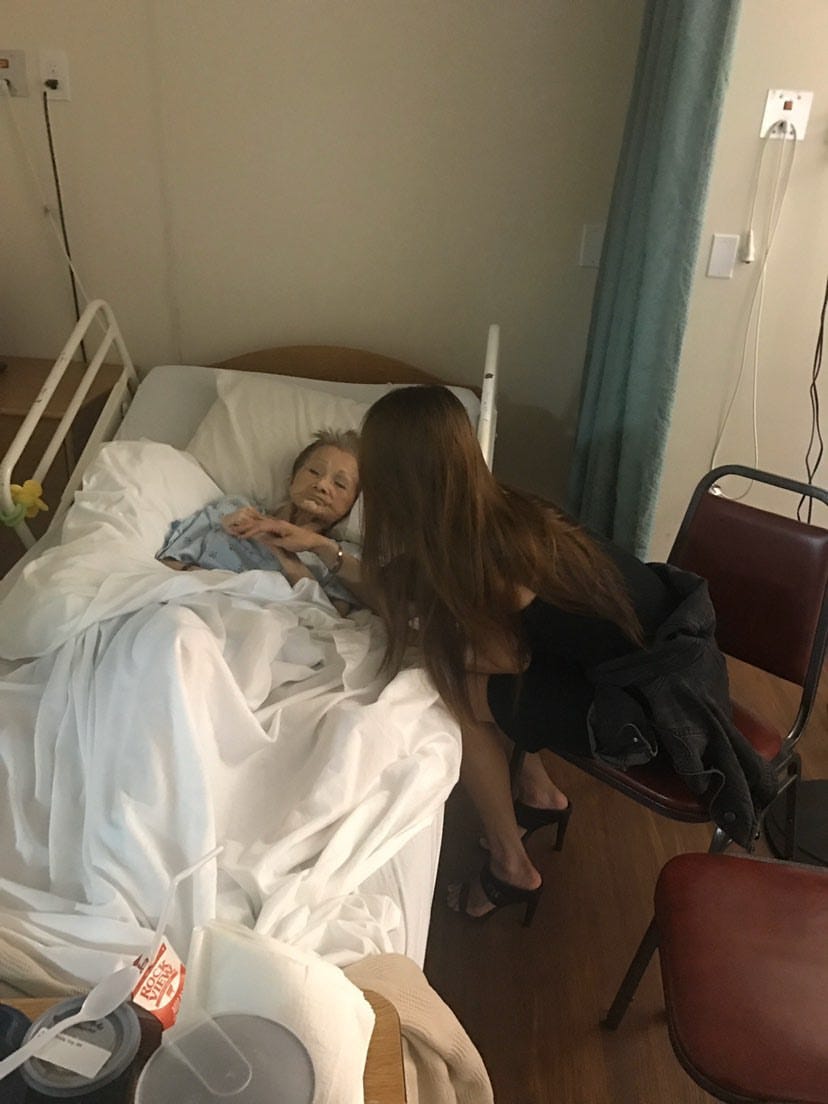
My grandmother loved it.
Every year without her, I find myself more tender than the year before. Grief is a strange arithmetic. It does not shrink with time. It changes shape. Most days, I am not actively sad. I move through life efficiently. I answer emails. I make plans. I forget.
But holidays expose absences.
The red packets stacked neatly on the sideboard. The fruit arranged in symmetrical pyramids. The television murmuring a gala no one is really watching. The dining table too loud, and yet somehow missing a particular laugh. The empty chair no one references directly.
Grief is often dormant until ritual calls it forward.
For years, I would take one piece of nian gao. Maybe two. I told myself it was discipline. Moderation. I did not want to indulge too much. I did not want to feel heavy the next morning. There was always a quiet calculation running in the background: what time it was, how much I had eaten, what the scale might say tomorrow.
Living in Japan the last few months that I did unsettled that calculation.
I did not gain ten pounds and abandon all structure. I did not swing into excess. But something softened, including the edges around my stomach where abs used to sit without effort. I began ordering boba when I wanted it. Finishing a bag of chips without negotiating with myself about additives. Eating past ten without imagining immediate consequence.
I laughed more easily.
And I began to see how tightly I had been holding myself.
Control, when dressed up as discipline, can look virtuous even optimal. But sometimes it is simply fear— fear of losing shape, losing composure, losing the thin line between effort and unraveling.
I realized how much I had restricted not only food, but feeling. How often I withheld words because they felt inconvenient. How often I chose composure over expression. How much of my life had been measured, trimmed, portioned.
It was, in its own way, a quiet illness: an attempt to avoid vulnerability that bordered on sterility.
I don’t regret the years of structure. But I see now that too much restraint can flatten joy. That the refusal to bend can become its own rigidity.
This year, I took another piece of nian gao. Maybe 5.
Not rebelliously. Not defiantly. Just humanly.
I let it burn my fingers slightly as I pulled it apart. I let the sweetness linger longer than I normally would. I didn’t calculate what it meant.
My grandmother would have laughed at how much I overthink these things. But she’d follow it with the fact that she did, too.
Perhaps grief is not only about missing someone. Perhaps it is also about remembering how they lived: indulgent in small pleasures that never required justification. (But boy, did she walk everywhere even in stilleto heels after surviving her first stroke.)
Life inevitably moves on. Most days are neutral. But holidays remind us that time is not theoretical. People age. Kitchens change. Chairs empty.
And so this year, I am trying something different.
Not abandoning discipline. Not romanticizing indulgence. Just loosening my grip where it has been clenched too long.
Control can be a reaction to fear. And I’ve been clinging onto control for so long that I can’t even remember what I am afraid of anymore. I just know I am tired of living as if joy needs permission.
Maybe this year I’ll return to the treadmill more consistently. Maybe I’ve drifted slightly too far in the other direction. That, too, is human.
For now, I am learning that letting go, even in small, sticky, golden slices, can be its own form of honoring.
Not only the dead.
But the living.
I think I’ll go grab some more slices.


As a child I remembered my grandmother teaching me how to make tong yuan the way she did it. She would laugh at home I was packing too much rock sugar and that it'd inevitably explode. Years later I still repeat the same mistake and she's no longer around to remind me with her kind gentle gaze. She would also insult most people by saying how they've grown wider but in her generation it was a sign of prosperity and success. So eat away and happy Chinese new year!
This unlocked a memory I forgot I had. One that I was very fond of. I used to have niangao during lunar new year too, but it was so long ago that I don't even remember who was the one who made them for me.
All good I guess, I was almost able to taste it through your writing.