


There is something deeply exciting about meeting someone you can look up to who simultaneously treats you like an equal.
It’s rarer than people admit.
In entrepreneurship, hierarchy is often exaggerated. Either someone is positioned as the visionary genius, and everyone else orbits, or the relationship collapses into competition. To find a dynamic where admiration and parity coexist is unusual. It requires confidence on both sides. The senior person has to value dialogue over dominance and be generous with influence, and the junior person cannot confuse learning with subordination.
When I first began interacting with an acquaintance, not yet a friend, and also a founder, it started almost casually. A half joke. A passing comment. The kind of exchange that could have stayed surface-level.
Instead, it deepened.
What followed wasn’t posturing or networking theater. It was an honest assessment of how we think. Working styles. Risk tolerance. Life outlook. We shared graphs and charts. We exchanged hacks for wellness while we were both grinding through our respective seasons. It was less “mentor and mentee” and more two people stress-testing ideas in real time.
What made it sustainable, I think, was that neither of us led with agenda. There was curiosity, but no pressure. No pre-scripted outcome we were trying to engineer. We didn’t negotiate in dollars but in value. We exchanged thinking. In hindsight, whether consciously or not, we were running quiet diagnostics. How does this person reason under uncertainty? How do they handle disagreement? Do they default to ego or inquiry? Those conversations became a kind of informal litmus test, not for compatibility in a narrow sense, but for alignment in temperament. Curiosity without urgency. Ambition without coercion. Depth without demand. That combination is rare, and it tends to reveal itself slowly rather than through spectacle.
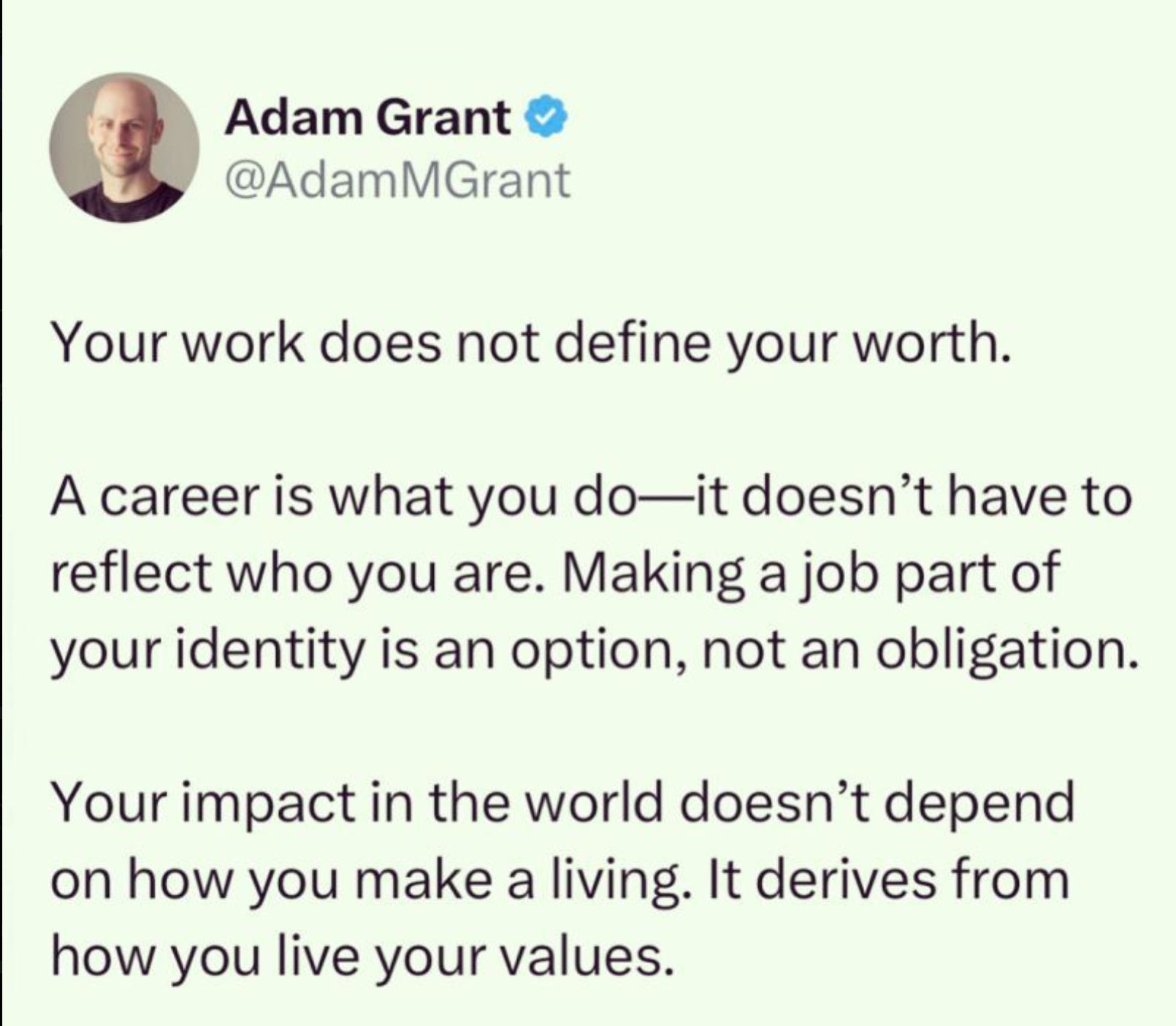
I will always default to Adam Grant and Paul Graham when it comes to entrepreneurship and self-development. Grant often writes about “non-obvious alignment”— how the strongest professional relationships aren’t built on charisma but on shared mental models. It’s not enough to admire someone’s output; you have to resonate with their process. You have to trust how they arrive at conclusions, not just the conclusions themselves. Graham has a similar theme in his essays about founders: what matters is how someone thinks when no one is watching. How they handle ambiguity. How they respond to constraints. Whether they default to blame or to iteration.
Those are the things I look for.
I apply what I half-jokingly call a 3-5-year lens to all meaningful relationships and ventures. Apparently so does he. Can I see this person in my orbit in three years? In seven? In ten? Not necessarily in the same configuration, but in the same current of mutual respect and intellectual exchange.
The answer rarely depends on immediate chemistry. It depends on quieter traits:
Curiosity that isn’t performative.
Grace under pressure.
Emotional regulation when things go sideways.
The ability to disagree without destabilizing the connection.
A sense of humor that survives stress.
Most importantly, it depends on whether both people are committed to growth without ego.
What struck me wasn’t just capability. It was composure. The willingness to engage deeply without dominating. To challenge ideas without diminishing the person offering them. To treat conversation as collaboration rather than competition. That combination creates something rare: upward inspiration without intimidation.
You feel stretched, but not small. You feel sharpened, but not threatened.
And you know, even if your paths diverge, that this is someone you’ll always be able to call. Not because of obligation, but because intellectual respect is durable.
Entrepreneurship can be isolating. Founders are often surrounded by people who either depend on them or defer to them. To find someone who meets you in the middle, who can both admire and critique, who can oscillate between discussing macro markets and swapping wellness hacks, is invigorating.
What started as a joke became an exchange of frameworks. And that exchange quietly built trust.
I don’t measure these dynamics by titles or outcomes. I measure them by whether the conversation leaves me more thoughtful than before. Whether the friction generates clarity. Whether the respect is mutual and stable enough to survive disagreement.
If so, it’s a resounding yes. Not because we will always work together. But because we will always be able to think together. And that, in my experience, is one of the rarest forms of alignment.
An absolute joy to learn and have an opportunity to reflect and grow due to your reflections. It’s not possible for you to create a bad read. Love that talent!
Growth mindset