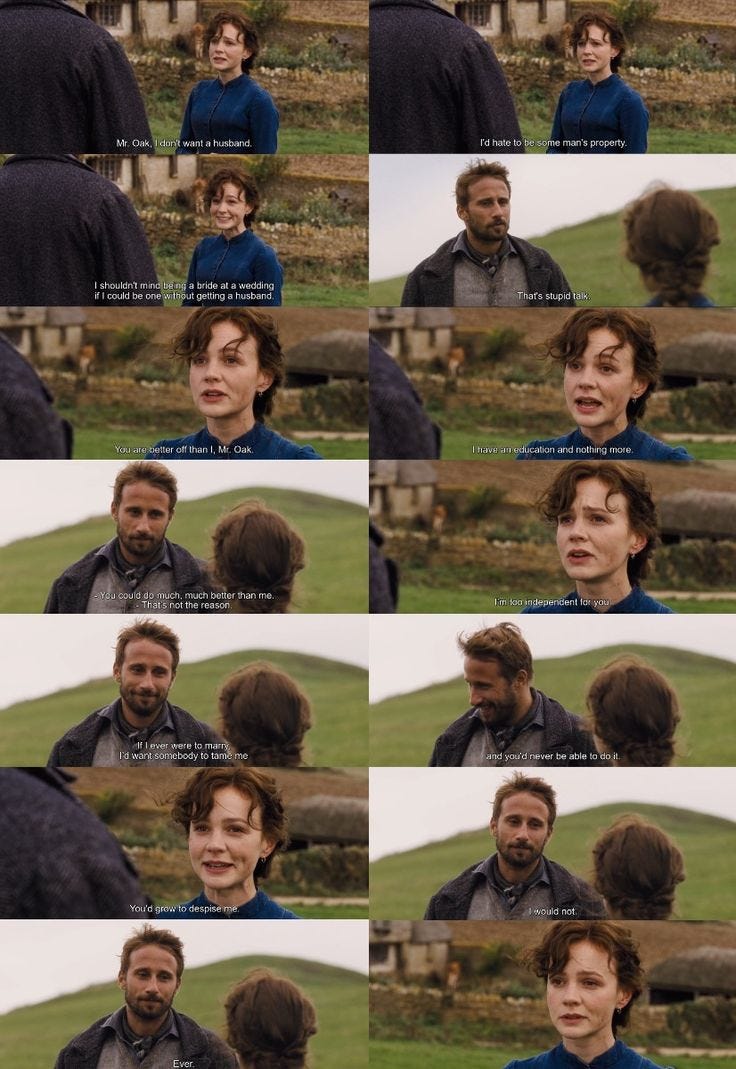
You will grow to despise me.
There’s a scene in Far from the Madding Crowd that I’ve watched more times than I’d admit. Bathsheba looks at Gabriel and lists to him numerous reasons they can’t be together, one being that he’s far too good and then when push comes to shove, she says:
“I am too independent for you. You will grow to despise me.”
And he says, “Never.”
That’s it. One word. He doesn’t argue with her. He doesn’t list the reasons she’s wrong. He doesn’t say no you’re not or I can handle it. He just says never. Like he’s already seen the independence and it didn’t register as a problem because he never experienced it as one.
I have watched this scene so many times because I have been Bathsheba in every room. I have looked at men and said some version of that line, out loud or with my body, and waited. I’m a lot. I work too much. I don’t lean easily. I have said it as a warning. I have said it as a wall. I have said it to save myself the time of watching someone fall in love with the ideal and then six months or a year in, start to resent the exact thing that attracted them. Because the woman who doesn’t need you is exciting until your presence starts to feel optional. And optional is not a feeling most people can sit with for long.
Gabriel doesn't wait for the fortress to come down. He doesn't even see a fortress. He sees a woman. Standing in a field. Telling him who she is. And he says: I know you.
And what gets me every time is that we hear absolutes all the time. I'll always love you. Forever. No matter what. People say them easily. Most people mean them when they say them. Very few people mean them a year later when the thing they're promising to love through is actually happening in front of them and it's not romantic. It's just hard.


